Valid Arguments
A valid argument is when the conclusion must be true if all the starting statements are true.
Introducción Breve
Valid arguments are like solving a puzzle where all pieces fit perfectly together to reach a definite conclusion. Just as a calculator gives you the right answer when you input correct numbers, a valid argument leads to a reliable conclusion when its starting points (premises) are true. This is a fundamental tool we use in everyday reasoning and problem-solving.
Explicación Principal
Structure Matters 🏗️
Like building blocks, a valid argument needs correct arrangement. It's like following a recipe - if you follow the steps correctly with good ingredients (true premises), you'll always get the intended dish (true conclusion).
Truth vs. Validity ⚖️
An argument can be valid even if the premises aren't true! It's like a perfectly working calculator - it will process whatever numbers you input correctly, even if you typed in the wrong numbers to start with.
Necessary Connection 🔗
In a valid argument, the conclusion follows unavoidably from the premises. It's like dominoes - if you set them up correctly and knock the first one, the last one must fall.
No Gaps Allowed 🚫
There can't be any missing steps or logical leaps. It's like crossing a river on stepping stones - you need each stone to be close enough to step from one to the next safely.
Ejemplos
- Example 1: 'All cats are mammals. Whiskers is a cat. Therefore, Whiskers is a mammal.' This is valid because if both starting statements are true, the conclusion must be true.
- Example 2: 'If it's raining, the streets are wet. The streets are wet. Therefore, it's raining.' This is NOT valid because the streets could be wet for other reasons (like street cleaning).
- Example 3: 'All bananas are yellow. This fruit is yellow. Therefore, this fruit is a banana.' This is NOT valid because other fruits can be yellow too - showing how validity requires more than just true statements.
Domina Cualquier Materia en 3 Pasos Sencillos
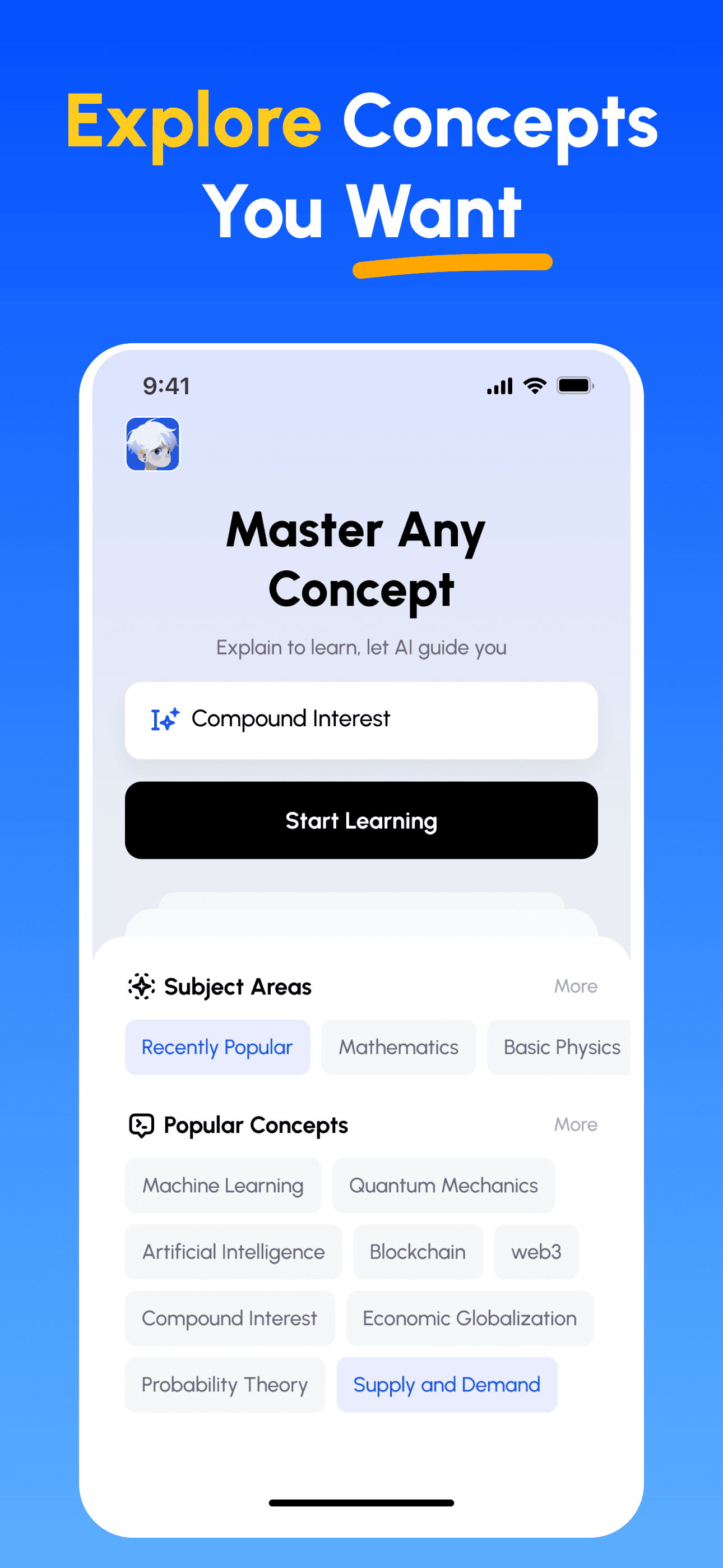
- Elige tu Objetivo de Aprendizaje: Selecciona entre cientos de conceptos de ciencias, negocios, humanidades y habilidades profesionales. Divide temas complejos en partes manejables.
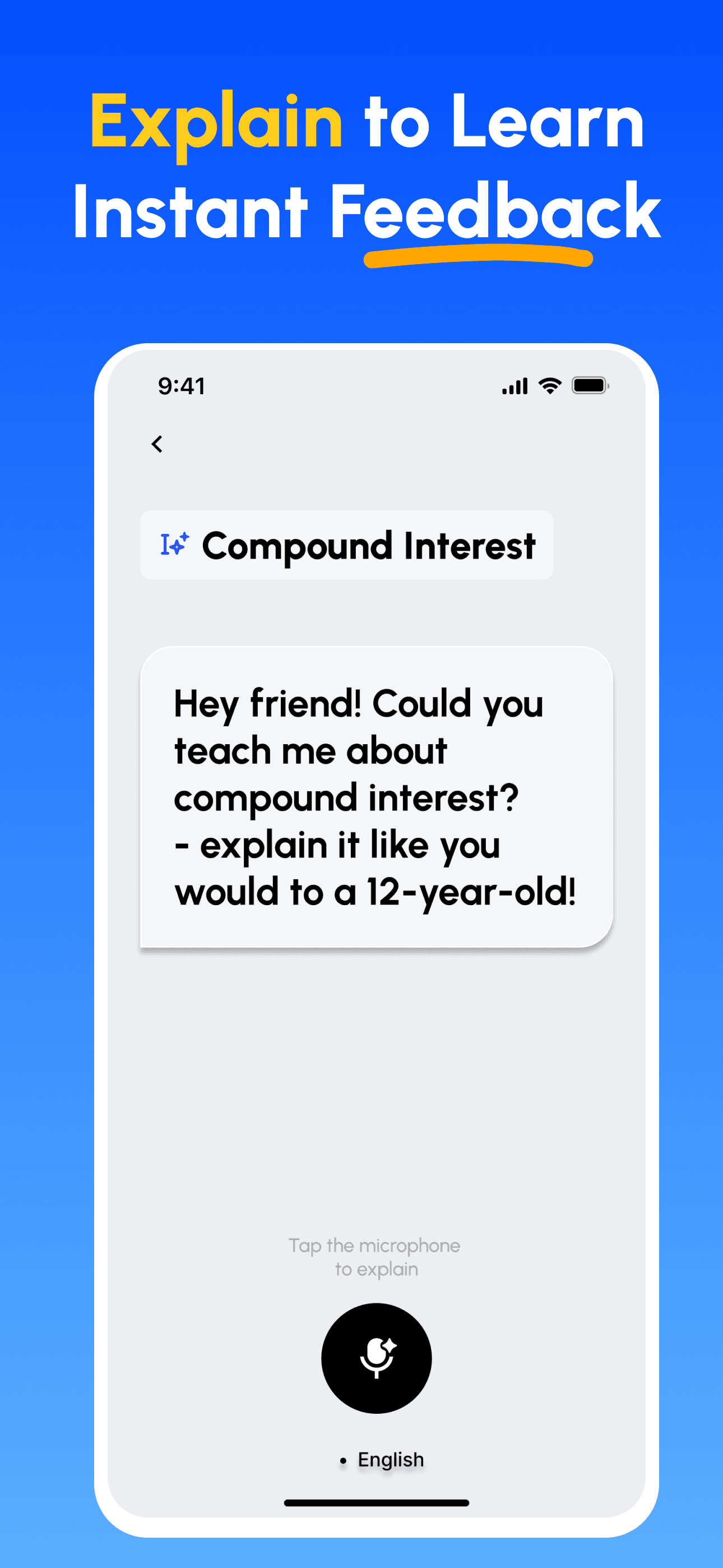
- Aprende Enseñando: Utiliza nuestra plataforma con IA para explicar conceptos como si estuvieras enseñando a otros. Descubre y llena tus vacíos de conocimiento al instante.
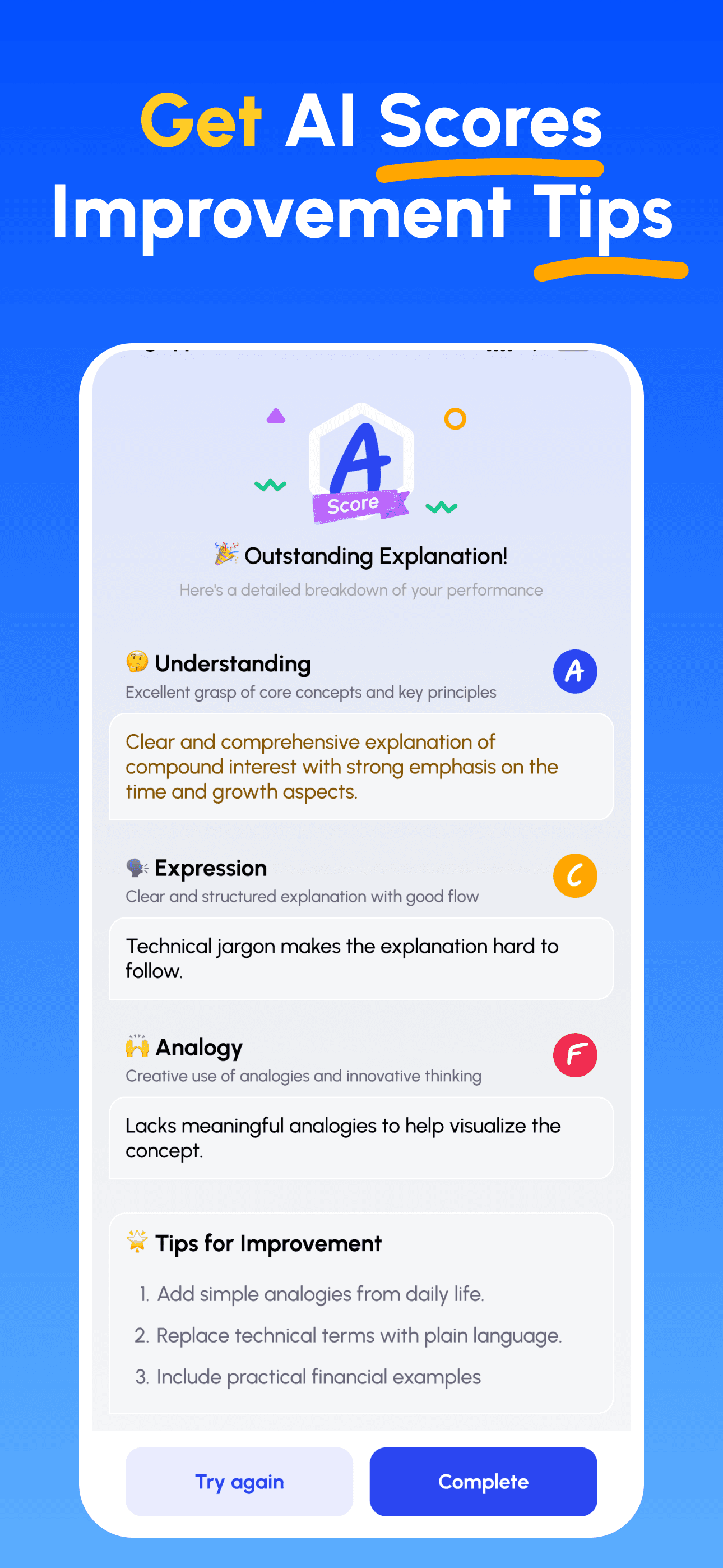
- Recibe Guía Experta de IA: Obtén retroalimentación inmediata y detallada sobre tu comprensión, claridad de explicación y habilidades de aplicación práctica.
- Revisa puntajes y mejora: Sigue consejos dirigidos, refina tu explicación e itera hasta poder enseñarlo con sencillez.
Descarga Feynman AI Ahora
¡Comienza tu viaje hacia una mejor comunicación hoy!