Search Algorithms
Methods computers use to find something specific, just like how you look for your keys in different places. 🔍
Brief Introduction
Search algorithms are like different strategies we use to find things in everyday life. Just as you might look for a book in a library or a name in a phone directory, computers need organized ways to find information in their data. These methods help computers find what they're looking for quickly and efficiently, saving time and effort.
Main Explanation
Linear Search 📋
It's like checking every box in your room one by one until you find what you want. The computer looks at each item in order until it finds the right one. Simple but can be slow with lots of items.
Binary Search 📚
Imagine looking up a word in a dictionary - you open it in the middle and decide to look in the first or second half. The computer does the same with sorted data, making the search much faster.
Hash Search 🎯
It's like knowing exactly which drawer contains your socks because you always put them there. The computer uses a special formula to know exactly where to look, making it super fast.
Tree Search 🌳
Think of a family tree where you can trace relationships by following branches. The computer uses similar branching paths to narrow down the search area quickly.
Examples
- Finding a contact in your phone: When you type the first few letters, your phone uses a search algorithm to quickly show matching names, rather than checking every contact one by one. 📱
- Looking for a book in a library: The way libraries organize books by categories and then alphabetically is similar to how search algorithms organize and find data efficiently. 📚
- Finding your car in a parking lot: Starting from a specific section and systematically checking rows is like how a computer might search through organized data to find what it needs. 🚗
How Feynman AI Guides Your Learning
- Choose Any Concept: Start from a topic you want to master — browse curated subjects or enter your own.
- Learn Essentials: Skim clear, structured explanations, key terms and common pitfalls to form a solid mental model.
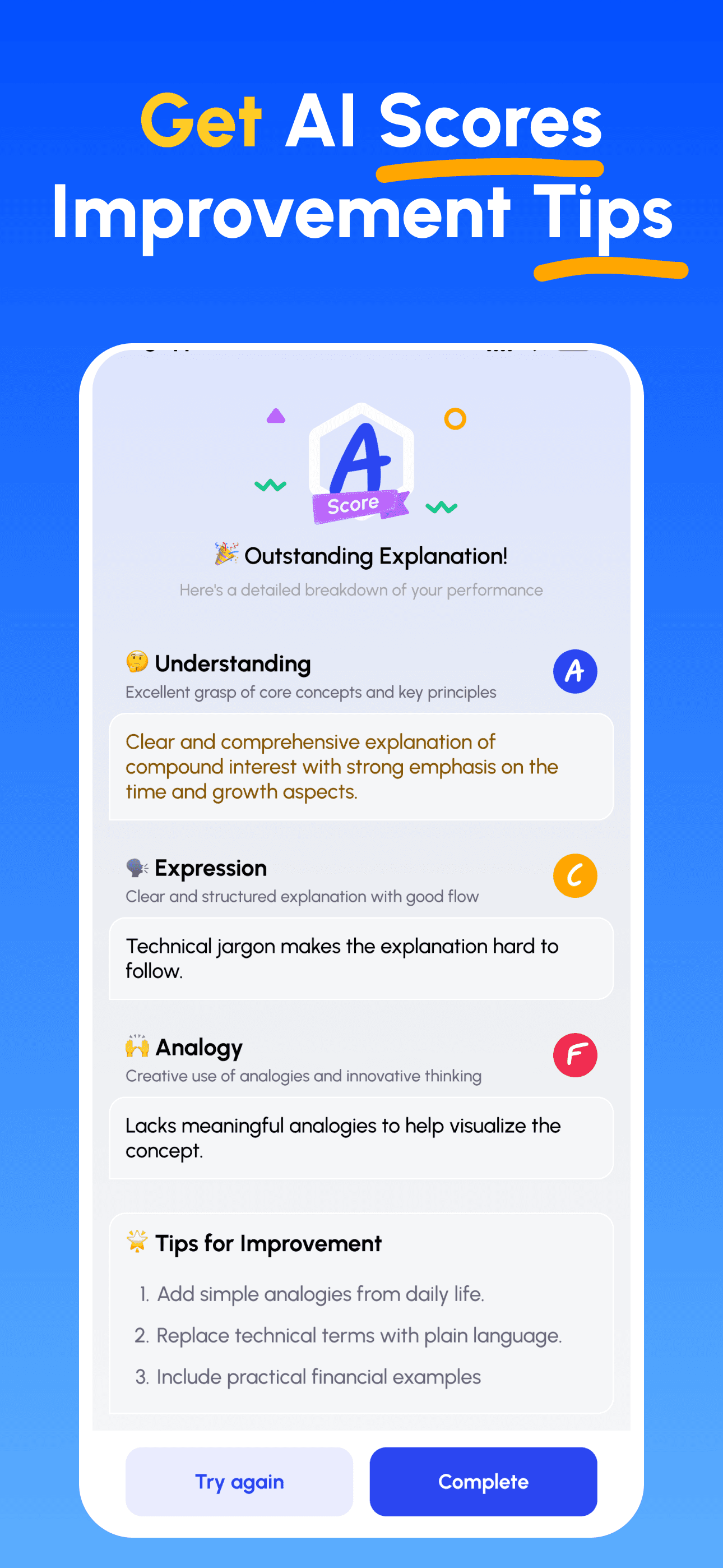
- Explain & Get Feedback: Record your explanation (voice or text). Get instant analysis on depth, clarity, structure and example quality.
- Review Scores & Improve: Follow targeted tips, refine your explanation and iterate until you can teach it simply.
Download Feynman AI Now
Start your learning journey today!