Market Prices
Market prices are the amounts that buyers pay and sellers accept for goods or services in everyday exchanges.
Brief Introduction
Market prices are like a dance between buyers and sellers, settling at a point where both are happy to make a deal. 💃 Just as you might negotiate at a garage sale, prices in markets adjust based on how many people want something and how much of it is available. This system helps distribute goods and services efficiently in our economy.
Main Explanation
Supply and Demand 📊
It's like a see-saw: when lots of people want something (high demand), prices go up. When there's too much of something (high supply), prices go down. Think of ice cream prices being higher in summer when more people want it!
Price Signals 🚦
Prices work like traffic lights telling people what to do. High prices tell sellers to make more and buyers to buy less. Low prices do the opposite. It's like how expensive gas makes people drive less and buy fuel-efficient cars.
Competition 🏃♂️
When multiple sellers offer similar items, they compete for customers by lowering prices. It's like two coffee shops on the same street - each tries to offer better deals to attract customers.
Market Balance ⚖️
Prices naturally find a sweet spot where the amount sellers want to sell matches what buyers want to buy. It's like finding the right temperature on your shower - not too hot, not too cold.
Examples
- 🍎 When a frost damages apple crops, fewer apples are available (lower supply), so apple prices rise at grocery stores. When the next good harvest comes, prices fall again.
- 🏠 Concert tickets for popular shows often start at one price but rise when many fans try to buy them. If the show isn't selling well, prices might drop to fill empty seats.
- 📱 When a new phone model comes out, it's usually expensive. As newer models appear and competition increases, the price of the older model typically falls.
How Feynman AI Guides Your Learning
- Choose Any Concept: Start from a topic you want to master — browse curated subjects or enter your own.
- Learn Essentials: Skim clear, structured explanations, key terms and common pitfalls to form a solid mental model.
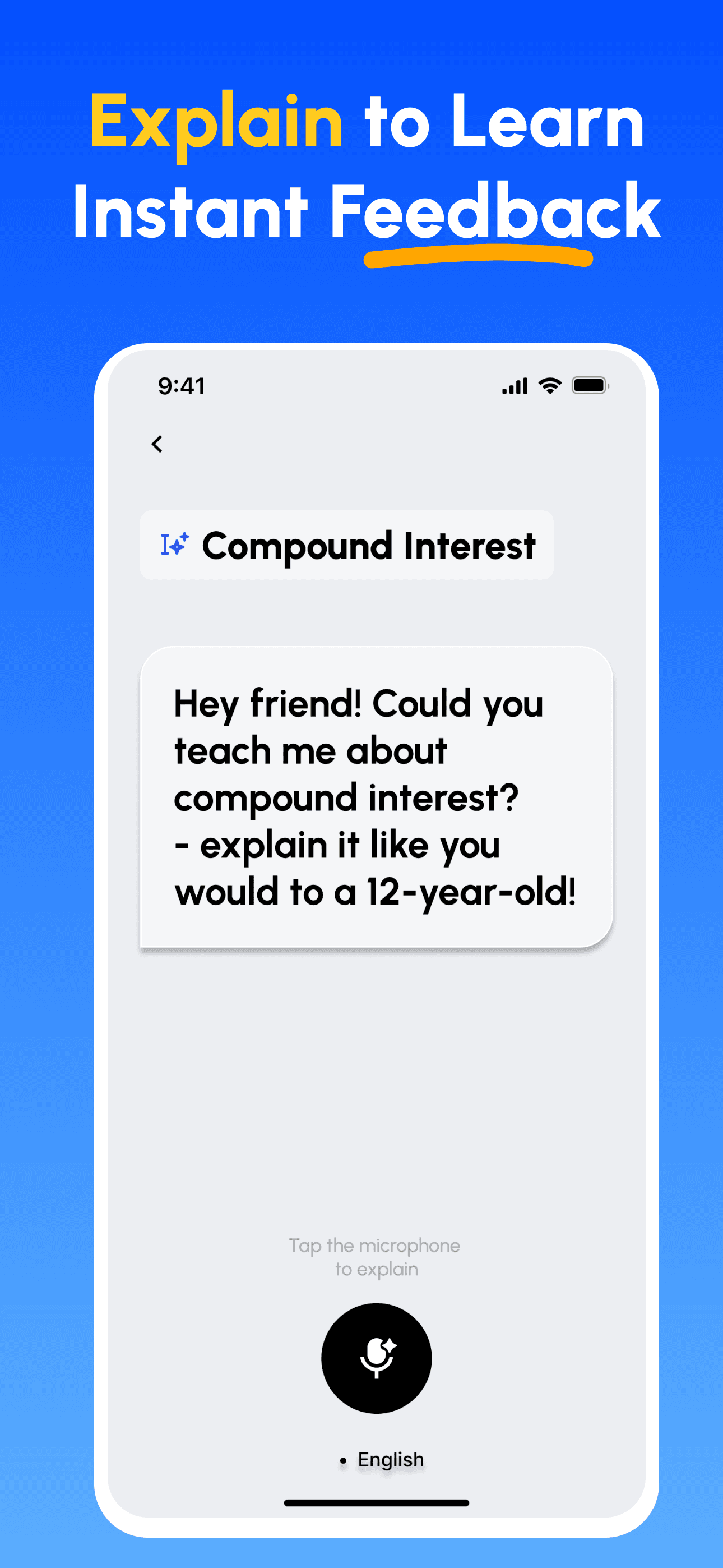
- Explain & Get Feedback: Record your explanation (voice or text). Get instant analysis on depth, clarity, structure and example quality.
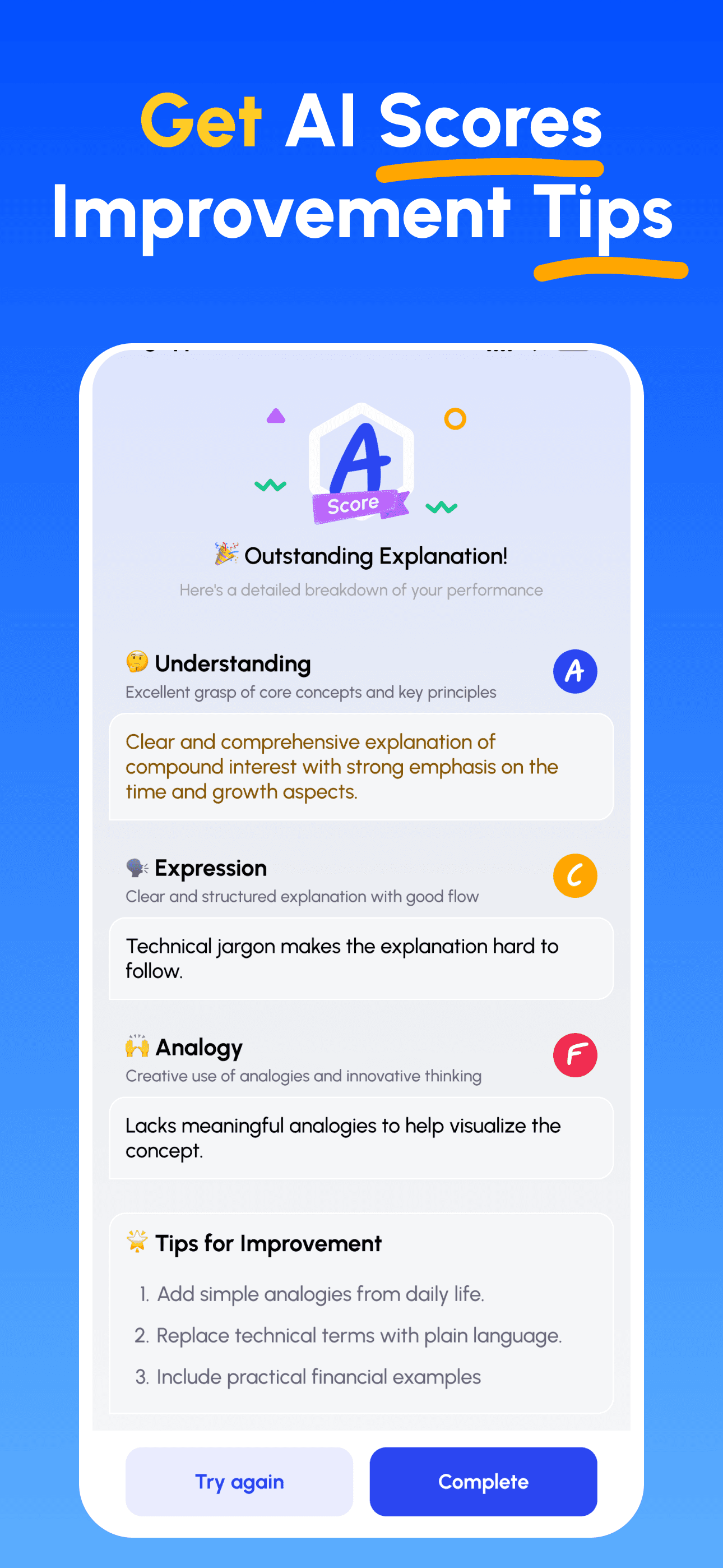
- Review Scores & Improve: Follow targeted tips, refine your explanation and iterate until you can teach it simply.
Download Feynman AI Now
Start your learning journey today!