Binary Numbers
Binary numbers are a way of counting using only two digits (0 and 1), just like counting with your light switch - on or off. 💡
Brief Introduction
Just like we normally count using ten digits (0-9), computers use a simpler system with only two digits: 0 and 1. This system is called binary, and it's perfect for computers because electronic circuits can easily represent two states: on or off. It's like having many light switches that are either up or down to represent different numbers. 🔢
Main Explanation
Two-Digit System
Instead of having ten digits like our regular numbers, binary only uses 0 and 1. It's like having a row of light switches where each switch can only be OFF (0) or ON (1). 🔌
Position Values
Each position in a binary number represents a power of 2 (1, 2, 4, 8, 16...), similar to how regular numbers use powers of 10. For example, the binary number 101 means 4 + 0 + 1 = 5. 📊
Counting in Binary
To count in binary, you flip digits from right to left: 1, 10, 11, 100, 101... It's like filling up an egg carton - when one space is full, you start filling the next one. 🥚
Computer Usage
Computers use binary because electronic circuits are best at dealing with two states: on or off. It's like using a simple yes/no system to represent all information. 💻
Examples
- Think of a row of 4 light switches: if you have switches ON-OFF-ON-OFF, that's binary 1010, which equals 10 in regular numbers. 💡
- Imagine a pizza ordering system where toppings are binary: 1 means you want it, 0 means you don't. So 1101 means you want cheese, sauce, and pepperoni, but no mushrooms. 🍕
- Picture a 3-question true/false quiz. Your answers could be represented as 101 in binary, meaning you answered True (1), False (0), True (1). ✅
How Feynman AI Guides Your Learning
- Choose Any Concept: Start from a topic you want to master — browse curated subjects or enter your own.
- Learn Essentials: Skim clear, structured explanations, key terms and common pitfalls to form a solid mental model.
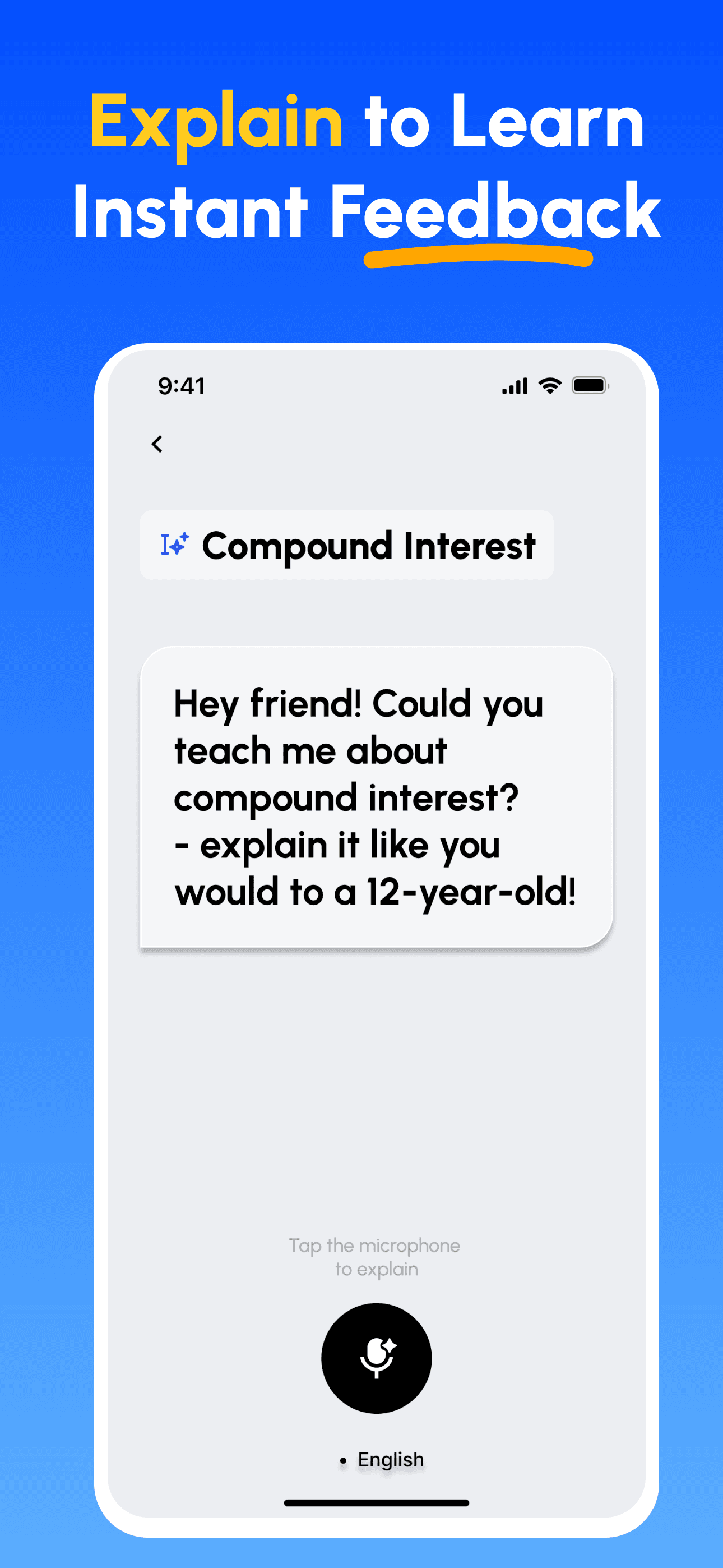
- Explain & Get Feedback: Record your explanation (voice or text). Get instant analysis on depth, clarity, structure and example quality.
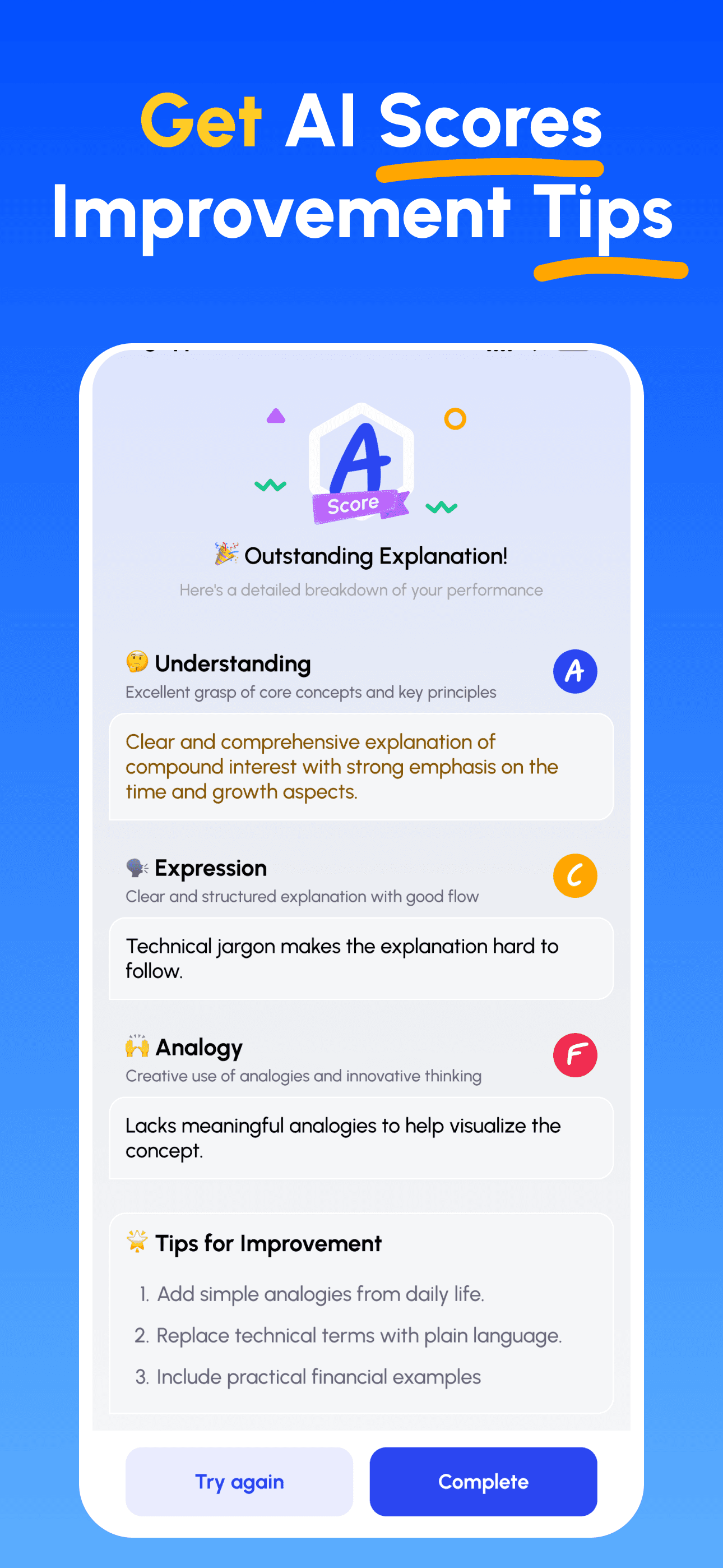
- Review Scores & Improve: Follow targeted tips, refine your explanation and iterate until you can teach it simply.
Download Feynman AI Now
Start your learning journey today!