Balance System
Your body's balance system helps you stay upright and move around without falling, like a built-in stabilizer. 🧘♀️
Brief Introduction
The balance system is like your body's internal GPS and stabilizer combined. Just as a bicycle needs both wheels and a rider's adjustments to stay upright, your body uses multiple parts working together to keep you balanced. This system helps you walk, run, and even stand still without toppling over, while also telling you which way is up. 🌟
Main Explanation
Inner Ear Mechanics
Think of your inner ear like a carpenter's level tool, but much more sophisticated. It contains fluid-filled chambers and tiny crystals that move when you do, telling your brain about your head's position - like a marble rolling around in a box. 👂
Visual Input
Your eyes are like a camera that constantly takes pictures of your surroundings. They help you know where you are in relation to other objects, just like how you use landmarks to navigate through a room. 👀
Body Position Sensors
Your muscles and joints have tiny sensors that work like position detectors. They're similar to how a video game controller knows exactly how much you've tilted it - constantly sending information about where your body parts are. 🦿
Brain Coordination
Your brain acts like a super-computer, taking all this information and making split-second decisions. It's like a traffic controller coordinating multiple signals to keep everything running smoothly. 🧠
Examples
- When you're riding a bicycle, your balance system helps you stay upright by constantly making tiny adjustments - just like how a tightrope walker maintains balance using their whole body. 🚲
- Walking on a rocky beach requires your balance system to work overtime - adjusting with each step on uneven surfaces, like a ship's stabilizer system in rough seas. 🏖️
- Standing on one foot while putting on shoes shows your balance system in action - coordinating multiple body parts to keep you stable, like a juggler keeping balls in the air. 🦶
How Feynman AI Guides Your Learning
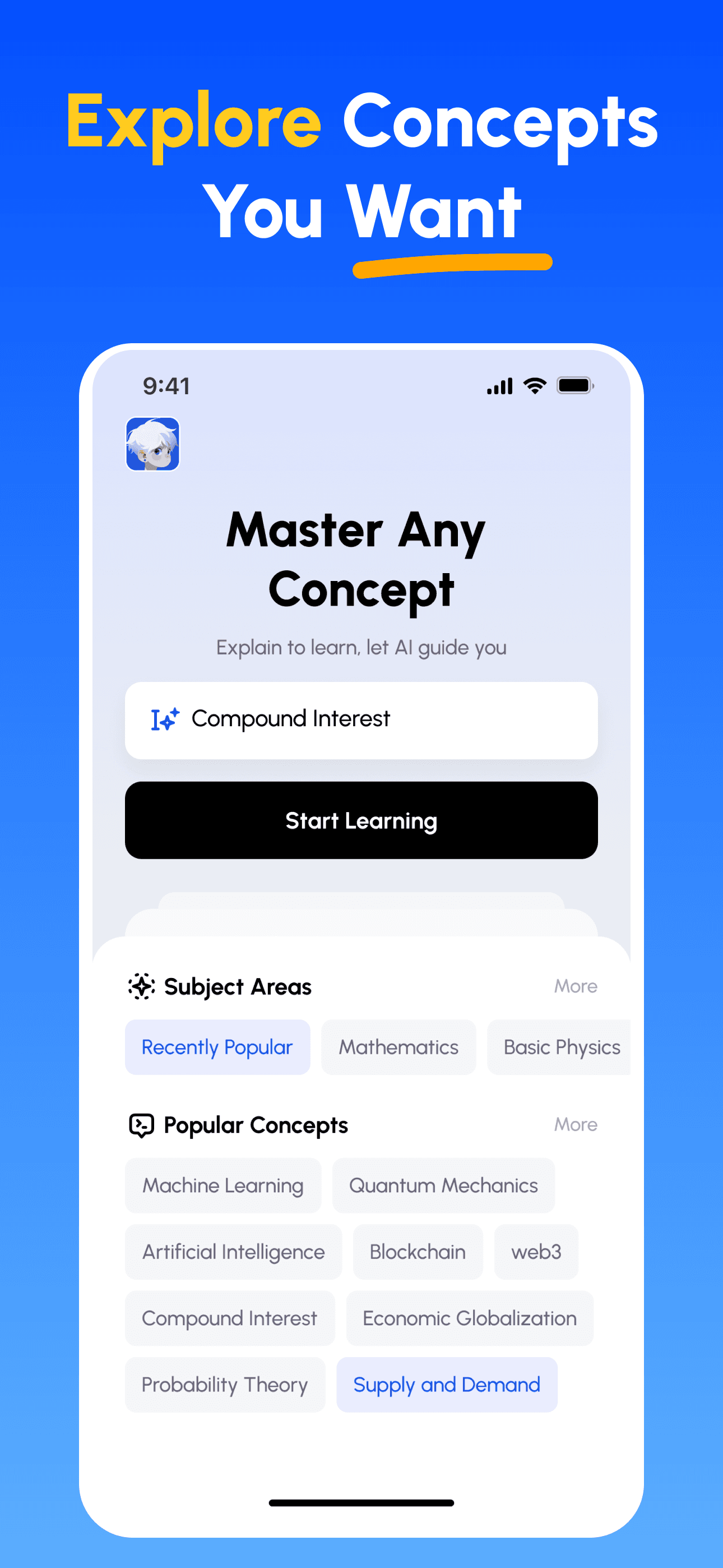
- Choose Any Concept: Start from a topic you want to master — browse curated subjects or enter your own.
- Learn Essentials: Skim clear, structured explanations, key terms and common pitfalls to form a solid mental model.
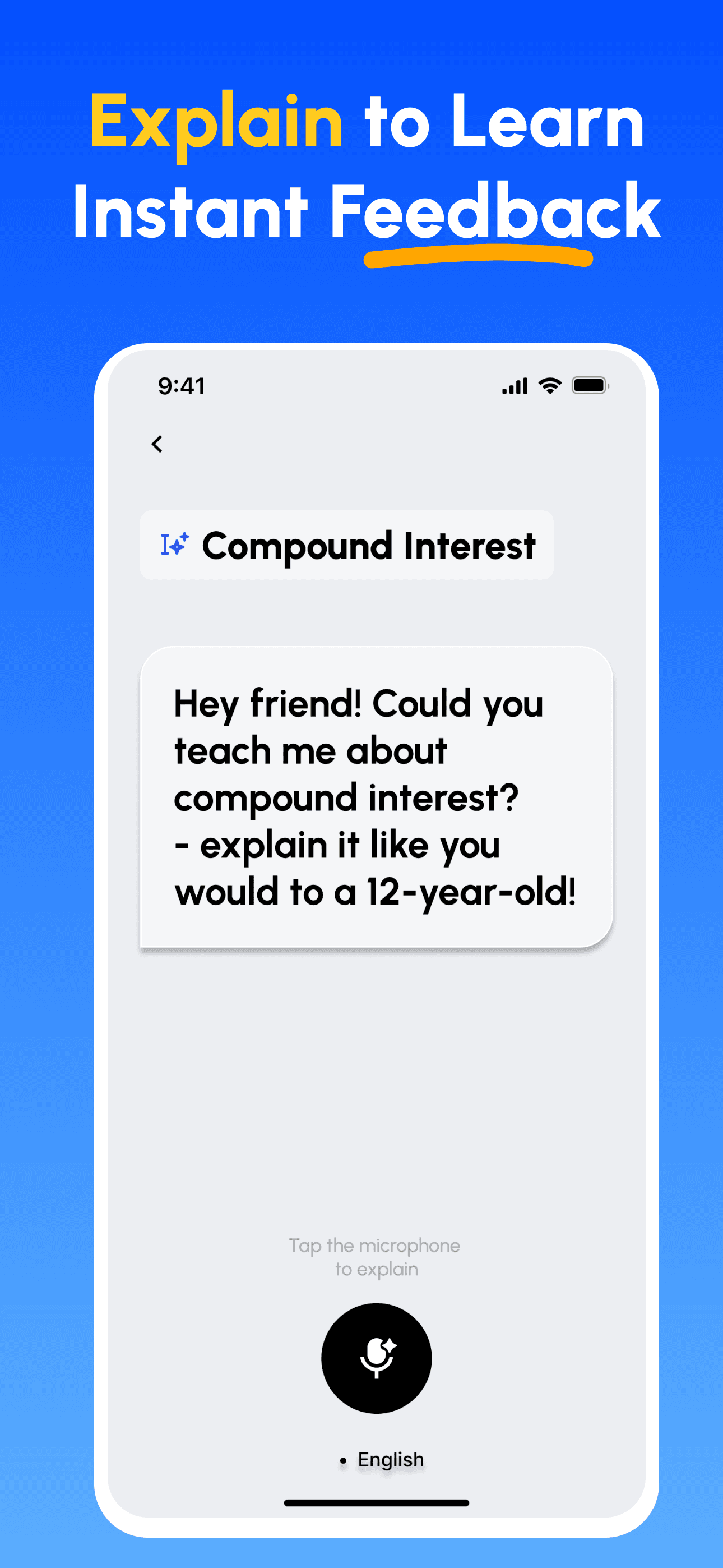
- Explain & Get Feedback: Record your explanation (voice or text). Get instant analysis on depth, clarity, structure and example quality.
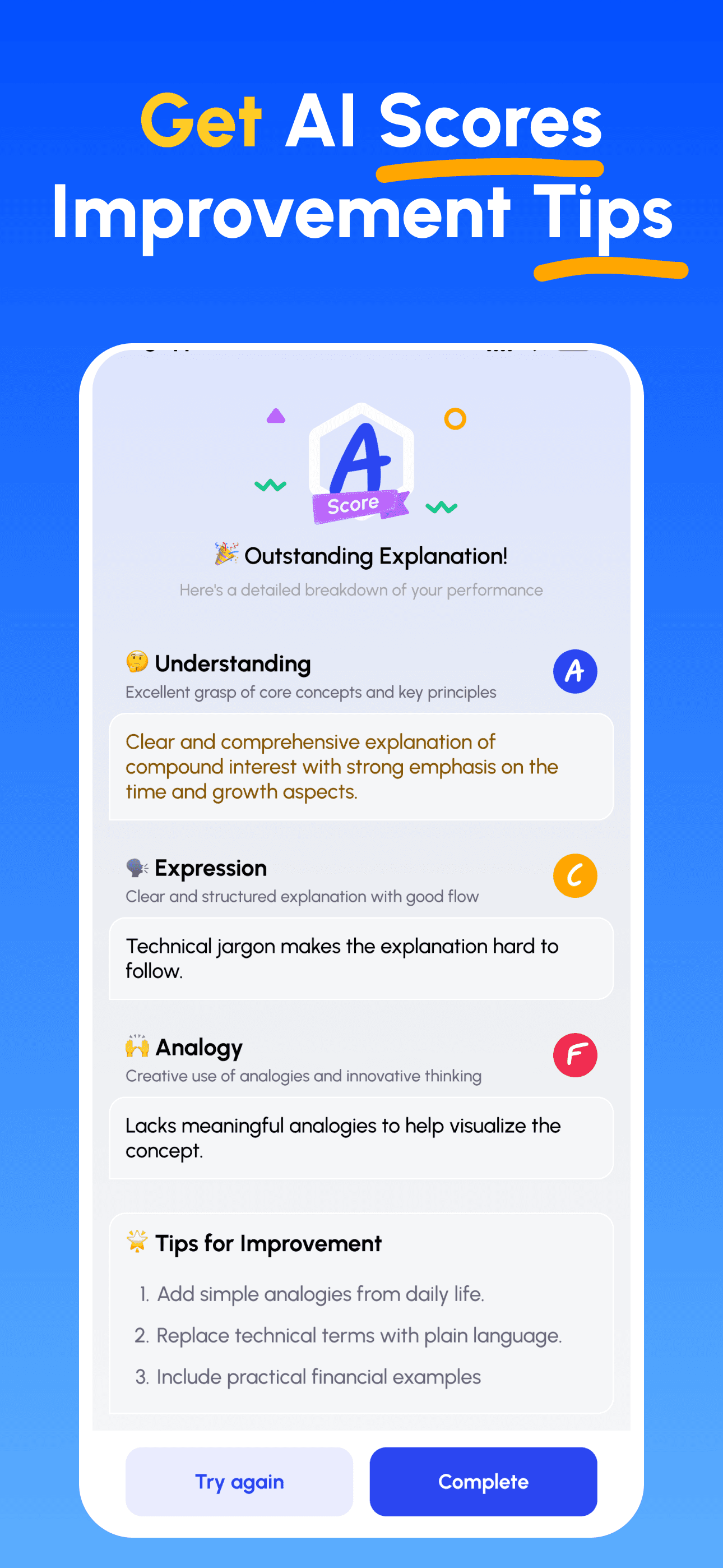
- Review Scores & Improve: Follow targeted tips, refine your explanation and iterate until you can teach it simply.
Download Feynman AI Now
Start your learning journey today!